Understanding the Difference: Trimming vs. Removal
When you look out at your yard in Buffalo and notice a tree that needs attention, the first question homeowners ask is simple: does it need to be trimmed, or does it need to come down? These are two very different services, and understanding the distinction can save you money and help preserve the natural beauty of your property.
Tree Trimming & Pruning is a maintenance service that removes dead, diseased, or overgrown branches to improve the tree's health, appearance, and safety. It's a way to care for a tree you want to keep. In contrast, Tree Removal is the complete extraction of a tree from your property, typically because the tree is dead, dying, diseased beyond recovery, or poses a significant safety risk. The choice between these two services depends on several factors that a qualified arborist evaluates during an on-site inspection.
Signs Your Tree Needs Trimming, Not Removal
A healthy tree with minor issues is almost always a candidate for trimming rather than removal. If your tree has branches that are rubbing against your roof, blocking sunlight from reaching your home, or creating hazardous conditions over walkways and driveways, trimming is the right choice. Similarly, if you notice dead branches mixed in with live growth, selective pruning can remove the problem areas while preserving the tree's overall structure and vitality.
Trees in Buffalo often benefit from seasonal trimming to maintain their shape and encourage healthy growth. Young trees may need formative pruning to develop a strong branch structure, while mature trees might require maintenance pruning to remove crossing branches or thin out dense canopies. If the tree is still producing new growth, has no signs of major disease, and the majority of its branches are healthy, trimming is almost certainly the solution. An arborist will assess the tree's overall condition and recommend the most appropriate trimming approach to restore its health and appearance.
When Tree Removal Becomes Necessary
There are situations where a tree has declined beyond the point where trimming can help. If a tree is dead or dying, no amount of pruning will restore it. Signs of a dying tree include bare branches even in growing season, extensive bark damage, large hollow sections in the trunk, or severe lean that suggests structural failure. When a tree is infested with untreatable pests or diseased with conditions like Dutch elm disease or emerald ash borer, removal may be the only option to prevent the problem from spreading to other trees on your property.
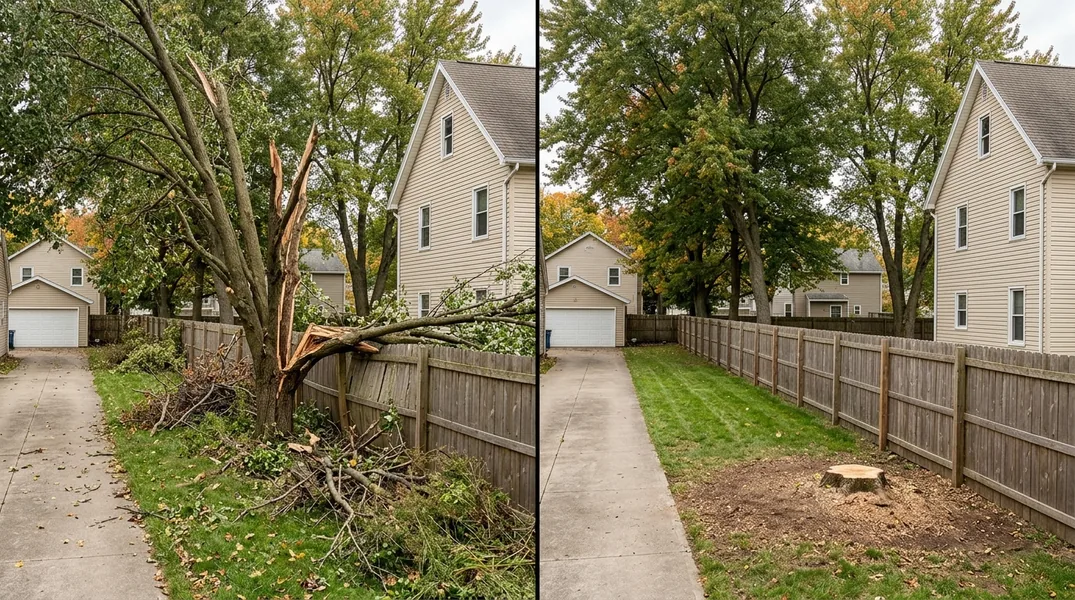
Safety is another major factor in the removal decision. If a tree is leaning dangerously, has a cracked or split trunk, or has large dead branches hanging over your home, power lines, or a neighbor's property, removal protects everyone. Storm damage can also necessitate removal if the tree's structural integrity has been compromised beyond repair. An experienced arborist will evaluate whether the tree can be saved through careful pruning or if removal is the safer, more practical choice. After removal is complete, many homeowners choose Stump Grinding to eliminate the remaining stump and reclaim their yard space.
How a Buffalo Arborist Evaluates Your Tree
A professional arborist doesn't make the trimming versus removal decision based on appearance alone. They conduct a thorough inspection that includes checking the tree's overall health, structural integrity, and the extent of any damage or disease. They look at the bark for signs of disease or pest damage, examine the canopy for dead wood and branch density, and assess the root zone for signs of instability or decay. This comprehensive evaluation ensures the recommendation is based on facts, not assumptions.
The arborist also considers your goals as a homeowner. Do you want to preserve the tree for shade and property value? Are you concerned about its proximity to structures? Is the tree blocking a view or creating maintenance issues? These practical considerations, combined with the tree's health assessment, guide the professional recommendation. If trimming can address your concerns while keeping a healthy tree in place, that's the preferred option. If the tree is truly beyond saving or poses an unacceptable risk, removal is the honest recommendation. This is why getting a free estimate from an experienced arborist is so valuable. The consultation is an opportunity to understand your tree's condition and your options.
The Cost Difference: Trimming vs. Removal
Budget is often a consideration when deciding between these services, and generally speaking, tree trimming is less expensive than tree removal. A routine trimming session typically costs less because it's less labor-intensive and doesn't require stump removal or extensive cleanup. However, the exact cost depends on factors like tree size, complexity of the work, and how much debris needs to be hauled away. For detailed information about what you can expect to pay, check our pricing page or call us at (716) 710-8792.
Tree removal is a larger investment because it involves taking down the entire tree, removing the stump, and clearing debris. In some cases, this is an unavoidable expense, especially if the tree is a safety hazard. However, spending money on preventive trimming now can extend a tree's life and delay or eliminate the need for removal later. Think of it as tree health insurance. Regular maintenance through proper trimming keeps your trees healthy, attractive, and safer for years to come. When you're weighing options, consider the long-term value of preserving a healthy tree versus the cost of removal and potentially replanting a new one.
Emergency Tree Service Near Me: When to Call Immediately
Sometimes the decision between trimming and removal is made for you by an emergency. If a storm damages your tree, leaving large branches hanging or the trunk split, you need immediate professional help. This is when Emergency Tree Service becomes essential. Buffalo residents should know that dangerous trees require prompt attention to prevent injury or property damage.
If you notice a tree leaning at an unusual angle, hear cracking sounds during wind, or see large branches that appear ready to fall, don't wait for an appointment weeks away. Contact Buffalo Tree Service right away at (716) 710-8792. Our team responds quickly to emergency situations and can assess whether the tree can be saved through emergency pruning or if immediate removal is necessary for safety. Having a trusted arborist on speed dial gives you peace of mind and ensures your family and property stay protected.
Looking for a professional tree service contractor in Buffalo? Buffalo Tree Service responds fast for all your tree service needs.
Get a Free QuoteOur services: Tree Removal · Tree Trimming & Pruning · Stump Grinding